When people think of the British Royal Family's country retreats, Balmoral Castle is usually the first place that comes to mind. But tucked away in the rolling countryside of East Ayrshire is another royal estate with an extraordinary story—one that came remarkably close to disappearing forever.
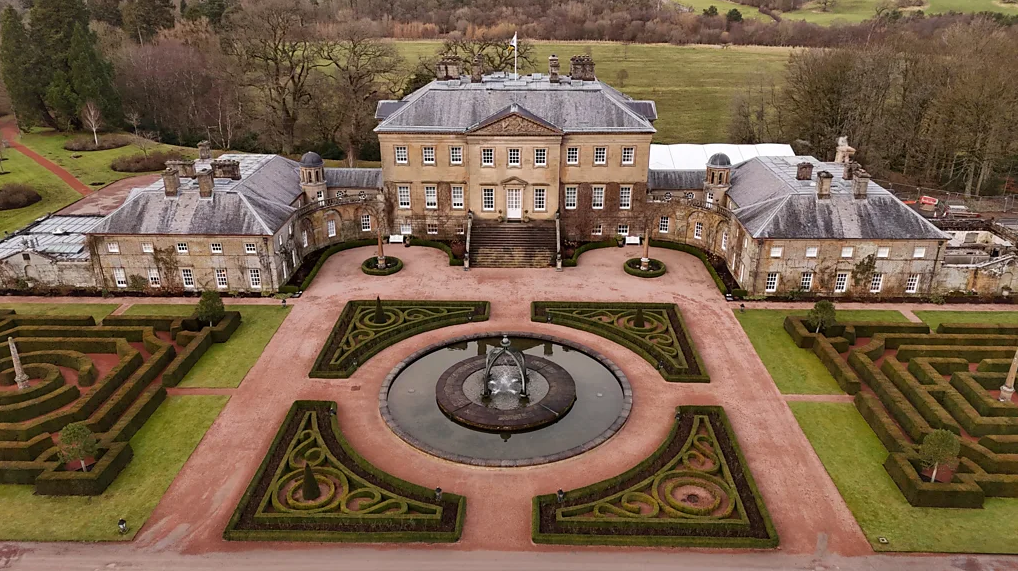
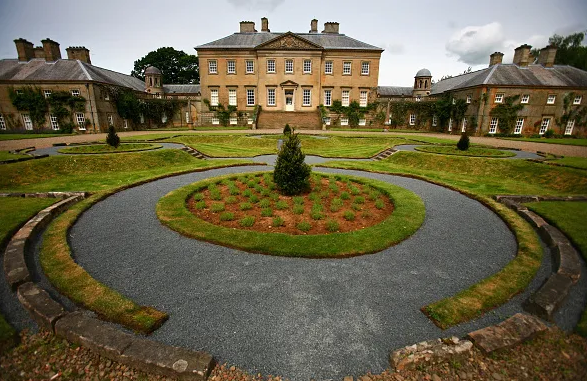
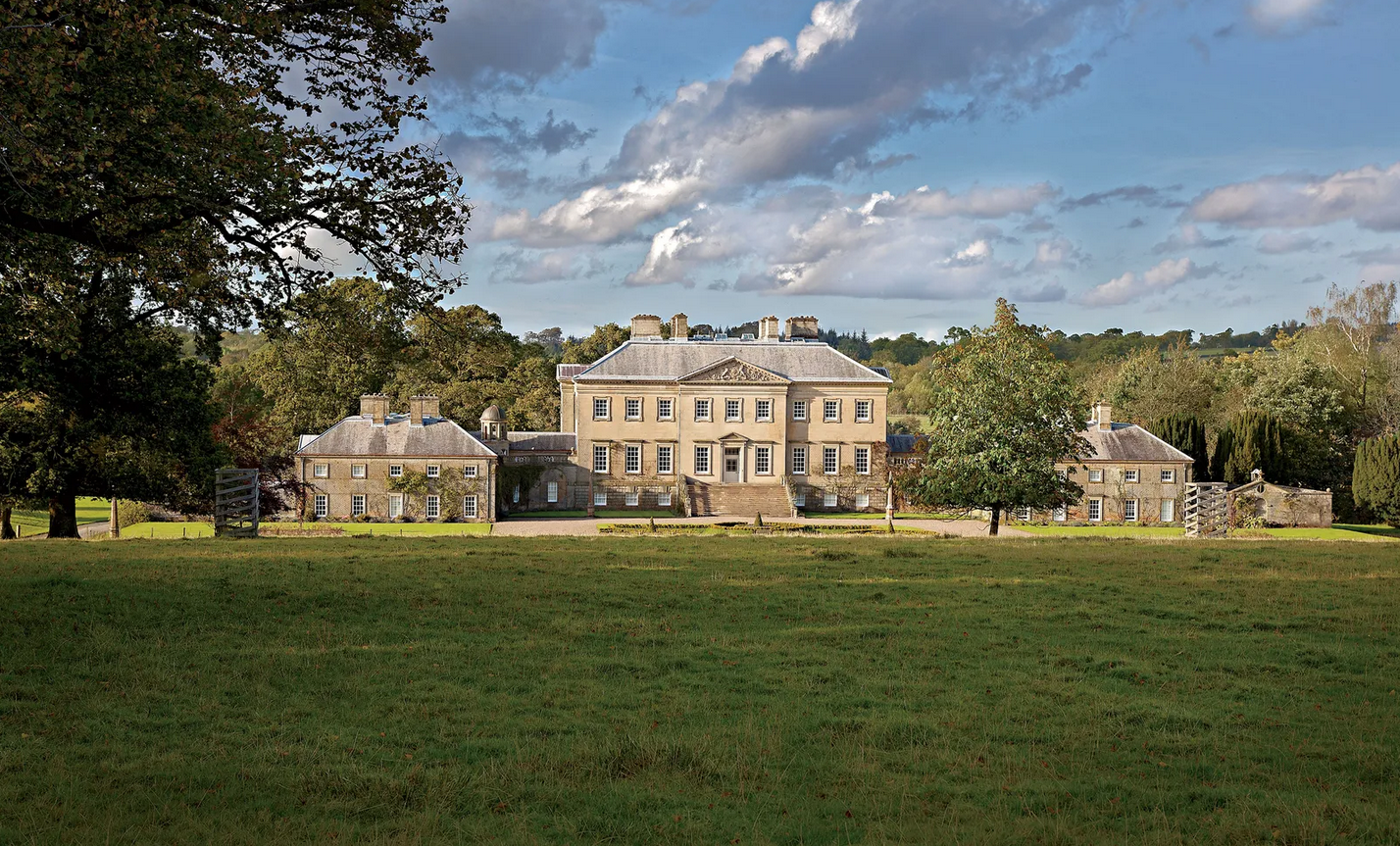
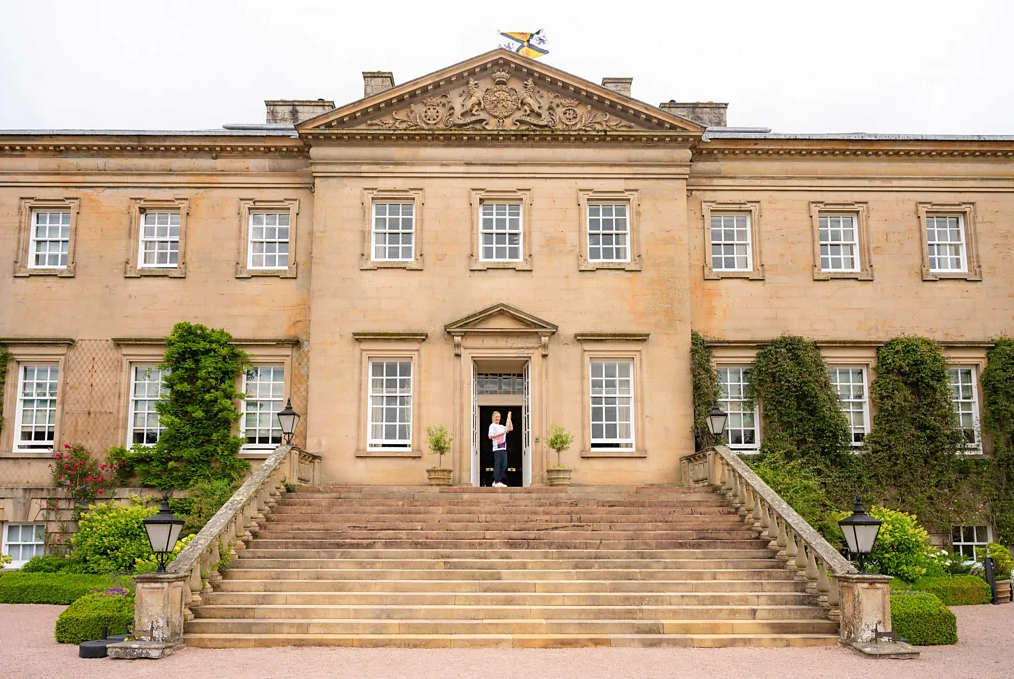
Dumfries House, near the former mining town of Cumnock in southern Scotland, is a magnificent 2,000-acre estate built around an elegant Palladian mansion. Inside are rare pieces of 18th-Century furniture, including an exceptional collection by celebrated cabinetmaker Thomas Chippendale.
Yet the estate's greatest story is not simply about architecture, antiques or royal history.
It is about how a historic Scottish house was rescued from the auction block and transformed into a living centre for traditional skills, education, environmental ideas and community regeneration.
Today, Dumfries House is closely associated with King Charles III and The King's Foundation. Visitors can explore the historic house and gardens, walk across the extensive estate and even stay overnight.
The Scottish Estate That Almost Disappeared
Dumfries House was completed in 1759 for William Dalrymple-Crichton, the 5th Earl of Dumfries. Over the years, the property passed through marriage into the Bute family and was carefully maintained by successive owners.
The house itself is an important example of 18th-Century Scottish architecture. Its symmetrical Palladian design was created by the renowned Scottish architects Robert and John Adam.
But what makes Dumfries House particularly special is its furniture collection.
The Earl commissioned furniture from Thomas Chippendale, one of the most influential furniture makers of the Georgian period. Around 50 examples of Chippendale's work remain at Dumfries House, making the collection exceptionally important.
For generations, the house remained a remarkable piece of Scotland's architectural and cultural heritage.
Then, in 2007, its future suddenly became uncertain.
The Marquess of Bute decided to sell the estate. The valuable contents were being prepared for auction, with furniture destined to leave Scotland and head towards London.
There was a very real possibility that Dumfries House would be broken up and its historic collection scattered.
King Charles III's £45 Million Rescue
The crisis eventually came to the attention of Charles, who was then the Prince of Wales.
Rather than watching the estate disappear piece by piece, he became involved in an ambitious effort to save it.
A £45 million rescue package was assembled, allowing Dumfries House and its important collection to remain together.
The decision was about much more than saving an impressive country house.
The rescue protected an extraordinary collection of Scottish and British heritage at a moment when it was facing an uncertain future.
As Charles said at the time, he believed something had to be done to stop a priceless part of Britain's heritage from being lost.
Nearly two decades later, the decision looks even more significant.
Dumfries House has developed into far more than a historic attraction. It has become an important base for The King's Foundation and a practical example of Charles's long-standing interest in traditional craftsmanship, education, sustainability and community development.
Step Inside Dumfries House
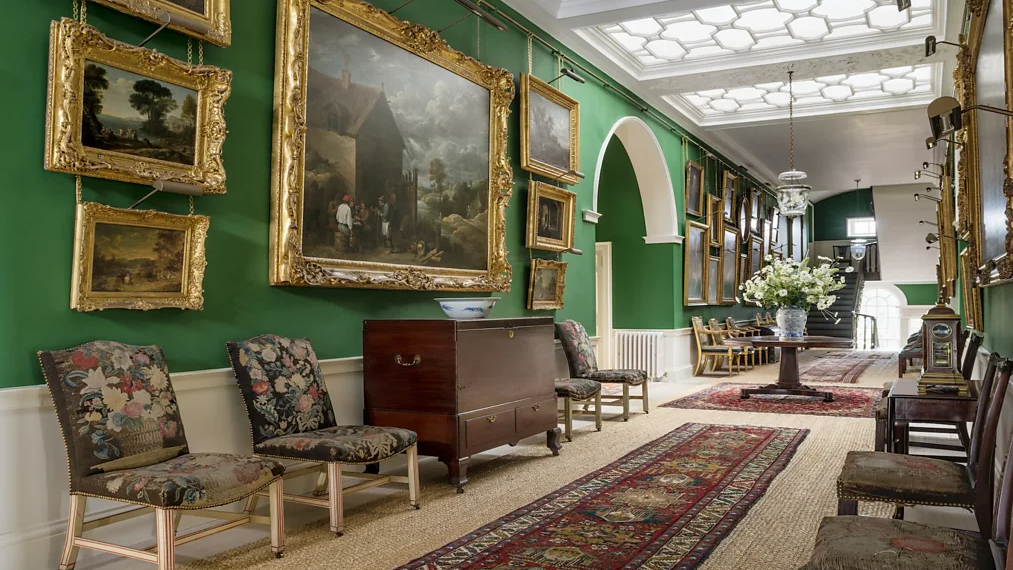
Walking into Dumfries House is rather like stepping into a carefully preserved Georgian time capsule.
The interiors contain ornate furniture, historic carpets, paintings, decorative plasterwork and striking chandeliers.
Among the collection are works associated with some of Britain's most respected craftsmen and artists.
Visitors can also find paintings by Sir Henry Raeburn, the celebrated Scottish portrait artist whose work included portraits of important figures of the Georgian era.
The grand rooms are filled with details that can easily be missed if you rush through.
Floral carpets, elaborate tapestries, carved furniture and decorative features reveal the wealth and craftsmanship of the period.
There is even an unusual connection to the current King.
Some rooms display watercolours painted by Charles himself, including landscapes inspired by the Scottish countryside around Balmoral and Royal Lochnagar.
And then there are the clocks.
Dumfries House has around 38 grandfather clocks, with some dating back more than three centuries.
The collection gives the mansion an especially distinctive character. Each clock represents another piece of craftsmanship and another reminder of how closely the estate's history is connected with traditional skills.
A Garden Estate Beyond the Mansion
The house is only one part of the Dumfries House experience.
Outside, the estate opens into a huge landscape of gardens, trees, water features and walking routes.
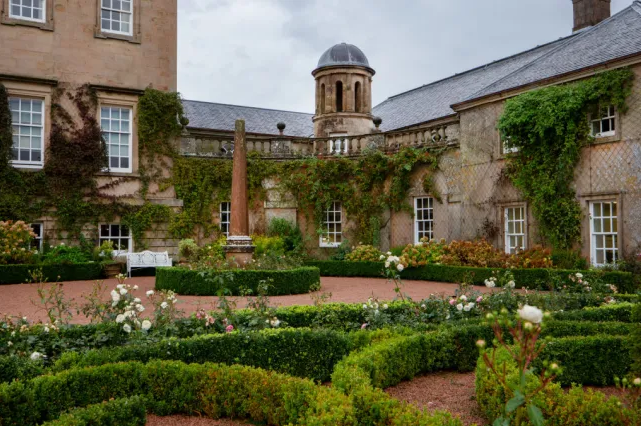
The five-acre Queen Elizabeth II Walled Garden is one of the highlights. Its planting, paths and formal design create a striking contrast with the surrounding countryside.
The estate also has an impressive arboretum containing around 500 species of trees.
Bridges and waterways add to the character of the landscape, including the historic Adam Bridge and an ornamental Chinese bridge crossing the Lugar Water.
The gardens also reflect an important part of the estate's modern identity: the idea that heritage and nature do not have to exist separately.
Instead, the historic landscape is being used as a place where conservation, gardening, education and sustainability can work together.
Dumfries House Has a Second Life
For visitors, Dumfries House may appear to be a grand historic property.
Behind the scenes, however, it is also an active educational centre.
The estate serves as a flagship site for The King's Foundation, supporting programmes focused on traditional crafts and practical education.
Students and apprentices can learn skills including:
- Stonemasonry
- Blacksmithing
- Joinery
- Glazing
- Horticulture
- Textile making
- Traditional arts
- Cookery
There are also specialist facilities including a cookery school, textile centre and engineering spaces.
This work has particular importance in the surrounding area.
East Ayrshire has a long industrial history, including communities shaped by coal mining and manufacturing. As traditional industries declined, many local areas faced fewer employment and training opportunities.
Dumfries House has attempted to tackle part of that challenge by creating a place where practical skills can be learned and passed to another generation.
Around 10,000 students are reported to study on the estate each year.
That makes Dumfries House unusual among Britain's historic royal attractions. It is not simply preserving the past behind glass—it is using the past to create opportunities for the future.
Why Traditional Crafts Matter
The importance of the estate's educational work goes beyond learning an old-fashioned trade.
Many traditional skills are disappearing as fewer young people enter specialist craft industries.
Once experienced craftsmen retire, skills such as traditional joinery, stonework, textile production and blacksmithing can be difficult to replace.
The King's Foundation believes these crafts still have a role in modern life.
Traditional repair and construction techniques can sometimes support the conservation of historic buildings while also reducing the need to discard existing materials.
For Dumfries House, the connection between craftsmanship and sustainability is therefore central to its wider mission.
The estate has become a place where heritage, education, employment and environmental thinking meet.
A Different Kind of Royal Attraction
This is what makes Dumfries House different from many famous British royal residences.
Visitors are not simply walking through rooms that belonged to aristocratic families.
The estate is still being used as a working centre for education and community projects.
The public can tour the historic house, explore the grounds and visit its gardens, while other parts of the estate continue to support training and educational programmes.
In that sense, Dumfries House has become a working piece of heritage rather than a museum frozen in time.
The Idea Behind Dumfries House Is Spreading
The approach developed at Dumfries House is not limited to Scotland.
The King's Foundation has applied similar ideas at other historic sites, combining conservation with education, sustainability and community engagement.
One example is the Castle of Mey in Caithness, one of mainland Britain's most northerly inhabited castles. The foundation has been involved in its stewardship while promoting a greener approach to tourism.
Highgrove Gardens, the private residence associated with King Charles III and Queen Camilla in Gloucestershire, has also developed a stronger educational and community role.
The wider idea is straightforward: historic places can have a useful role in modern communities.
They can preserve architecture and traditions while also creating opportunities for education, tourism and employment.
From Scotland to Australia
Perhaps the most ambitious example is thousands of miles away.
The King's Foundation has also become involved with Hillview Estate in New South Wales, Australia.
The historic property was once used as a summer residence by the Governor of New South Wales. The foundation's plans include developing it as an international centre for education and training in heritage crafts.
The Dumfries House model is an important inspiration for the project.
If successful, the idea could demonstrate that heritage-led regeneration is not limited to Britain or Scotland.
How to Visit Dumfries House
Dumfries House is open throughout the year, while access to the historic mansion is generally through guided tours.
Visitors can choose from different experiences, including standard house tours and specialist tours focusing on areas such as Chippendale furniture, art and clocks.
Because tours can become busy, booking in advance is advisable.
The wider 2,000-acre estate can be explored on foot, offering visitors the chance to experience the landscape without necessarily joining a house tour.
The Queen Elizabeth II Walled Garden has a separate admission charge, while other gardens and parts of the estate can be explored free of charge.
For those who want to stay longer, Dumfries House Lodge provides accommodation in a renovated former farm building, while self-catering cottages are also available.
Income generated through tours, events and the estate shop contributes towards the work of The King's Foundation.
From a Possible Auction to a Living Legacy
The story of Dumfries House could have ended very differently.
In 2007, its furniture was being prepared to leave the estate and its future as a complete historic property was in serious doubt.
Instead, the intervention led by Charles helped keep the house, landscape and collection together.
But perhaps the most remarkable part of the story is what happened afterwards.
Dumfries House did not simply become another royal property open to tourists.
It evolved into a place where young people can learn traditional skills, where historic craftsmanship is kept alive and where ideas about sustainability and community development can be tested.
The grand mansion and its priceless furniture remain major attractions, but they are no longer the whole story.
Today, Dumfries House represents something rather different: a belief that protecting the past can also help build the future.
For a property that once stood on the edge of being dismantled and scattered across Britain, its transformation is remarkable.
What was almost lost has instead become a living Scottish heritage project—one where history is not merely remembered, but actively practised, taught and carried forward.